
World
Custer State Park South Dakota: First Time Visitor Guide

Custer State Park South Dakota: First Time Visitor Guide
If you’re looking for one of the best outdoor adventures in the Black Hills region, Custer State Park should be at the top of your list. This massive 71,000-acre park in southwestern South Dakota is home to roaming bison herds, stunning granite peaks, scenic drives, and some of the best hiking trails in the Midwest. Whether you’re visiting for a day or spending a full week, this guide will help you make the most of your trip.
Key Takeaways
- Custer State Park covers over 71,000 acres in the Black Hills of South Dakota
- The park is famous for its free-roaming bison herd of approximately 1,300 animals
- The Wildlife Loop Road is an 18-mile scenic drive where you’ll see bison, pronghorn, burros, and prairie dogs
- The Needles Highway (SD Highway 87) is one of the most scenic drives in the United States
- Best time to visit is June through September for warm weather and full trail access
- Entry requires a South Dakota state park license: $30 per vehicle for a 7-day pass
- Camping, hiking, fishing, and swimming are all popular activities within the park
Getting to Custer State Park
Custer State Park is located in the southern Black Hills of South Dakota, just east of the town of Custer. The park entrance is about 45 miles southwest of Rapid City, making it an easy day trip or a central base for exploring the entire Black Hills region. If you’re flying in, the closest major airport is Rapid City Regional Airport (RAP), which is about an hour’s drive from the park.
The park has three main entrances: the west entrance near Custer, the east entrance near the town of Custer on US Highway 16A, and the south entrance near Wind Cave National Park. Most visitors enter from the west, which gives you immediate access to the Wildlife Loop Road and the park headquarters where you can pick up maps and get trail conditions.
The Wildlife Loop Road
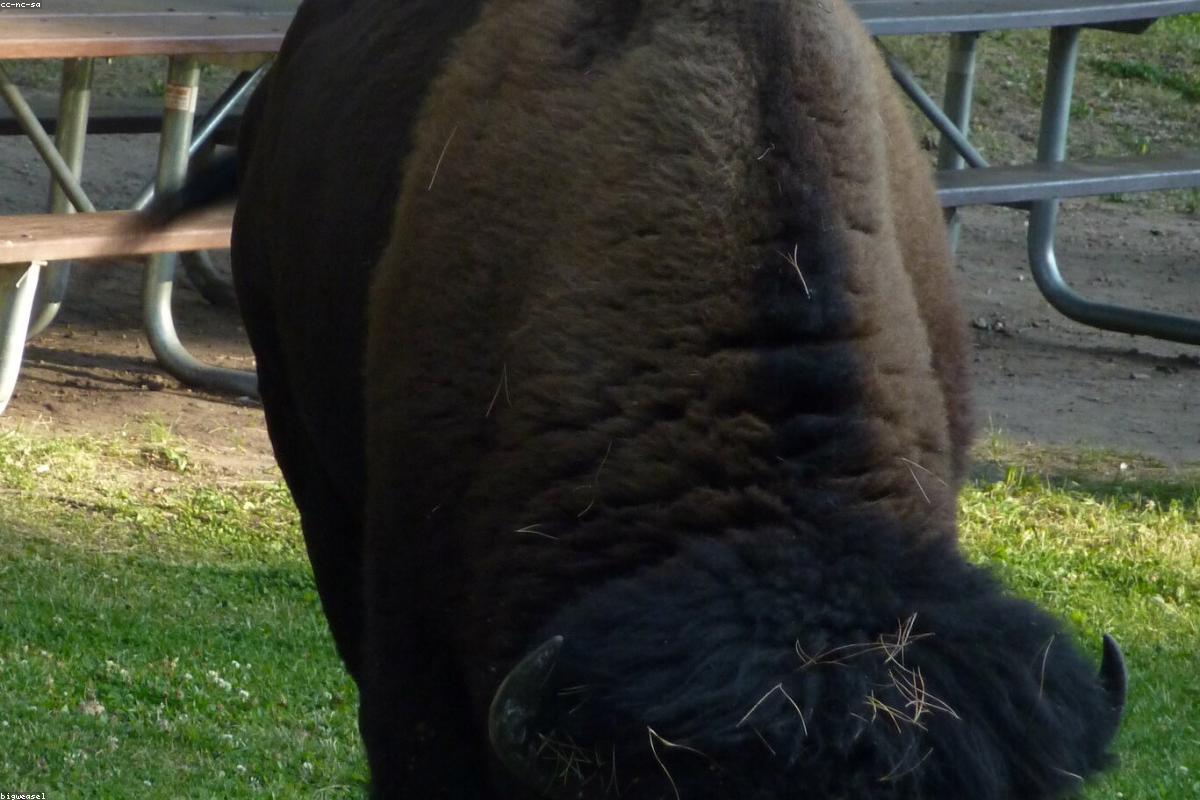
The Wildlife Loop Road is the single most popular attraction in Custer State Park, and for good reason. This 18-mile scenic drive winds through rolling grasslands and pine-covered hills where you’ll encounter some of the park’s most famous residents. The bison herd here numbers around 1,300 animals, and they have absolutely no interest in moving out of the way of your car. You’ll likely find yourself stuck in a “bison jam” where dozens of these massive animals block the road while they graze or simply lounge in the sun.
Besides bison, the Wildlife Loop is home to pronghorn antelope, wild burros (who will stick their heads into your car window if you let them), prairie dog towns, and occasionally elk and mule deer. The burros along the road are a particular favorite with kids. They’re descendants of pack animals that once served a local burro racing tradition, and they’ve become quite the roadside attraction. Bring carrots if you want to make some fast friends, though feeding wildlife is technically discouraged.
The best times to drive the loop are early morning and late afternoon when the animals are most active. Midday in summer, many of the bison retreat to shaded areas and are harder to spot. The drive takes about one to two hours without stops, but you’ll want to budget at least half a day to really enjoy it.
The Needles Highway
If you think the Wildlife Loop is impressive, wait until you drive the Needles Highway. This 14-mile stretch of South Dakota Highway 87 cuts through some of the most dramatic granite formations in the Black Hills. The road is narrow, winding, and features several tunnels that frame views of the surrounding peaks like a natural picture frame.
The “needles” are towering spires of granite that jut skyward from the forested hillsides. Some of these formations rise over 300 feet and have been sculpted by millions of years of erosion into shapes that look almost impossible. The most famous needle is the Eye of the Needle, a dramatic rock arch that you can see from the road. There are several pullouts along the highway where you can stop, take photos, and just stare at the landscape in disbelief.
The Needles Highway connects with the Iron Mountain Road (US Highway 16A) to form a spectacular loop drive that also includes pigtail bridges and tunnels framed by Mount Rushmore. This combined loop is one of the best scenic drives in the entire United States and should not be missed. The road is not recommended for vehicles over 35 feet in length due to the narrow tunnels and tight curves.
Best Hiking Trails in Custer State Park
Sylvan Lake Shore Trail
This is the most popular hike in the park, and it’s easy to see why. The 1.6-mile loop around Sylvan Lake takes you past smooth granite boulders, through pine forests, and along the edge of a crystal-clear mountain lake. The trail is relatively easy with some rocky sections, and it’s perfect for families. Sylvan Lake was originally created by a dam built in 1891, and the surrounding rock formations were used as a filming location for the movie National Treasure: Book of Secrets.
Black Elk Peak Trail
For a more challenging adventure, hike to Black Elk Peak, the highest point in South Dakota at 7,244 feet. The trail is about 7 miles round trip from the Sylvan Lake trailhead and gains roughly 1,500 feet in elevation. The summit features a stone fire lookout tower built by the Civilian Conservation Corps in 1938, and the views from the top are absolutely breathtaking. On a clear day, you can see four states: South Dakota, Wyoming, Montana, and Nebraska. Start early in the morning to avoid afternoon thunderstorms, which are common in summer.
Sunday Gulch Trail
This 5.5-mile loop trail is a hidden gem that many visitors overlook. It winds through a scenic gulch with granite outcroppings, wildflowers, and a small creek. The trail is moderately difficult with some steep sections, but the solitude and beauty make it well worth the effort. In spring and early summer, the gulch is carpeted with wildflowers, and you’ll likely have the trail mostly to yourself.
Grace Coolidge Creek Walk
For an easy, relaxing walk, try the Grace Coolidge Creek Walk. This flat, 1-mile trail follows a gentle creek through a peaceful meadow. It’s perfect for families with young children or anyone looking for a low-key nature walk. The creek is stocked with trout, so you might see anglers casting lines along the banks.
Custer State Park Lake Comparison
| Lake | Location in Park | Best Time to Visit | Highlights |
|---|---|---|---|
| Sylvan Lake | Central (Needles District) | June – September | Swimming, kayaking, hiking, granite scenery |
| Legion Lake | Central (near park headquarters) | May – September | Fishing, swimming beach, camping, easy access |
| Stockade Lake | Eastern section | May – September | Fishing, boating, quiet camping, wildlife viewing |
| Center Lake | Northern section | June – September | Fishing, canoeing, remote and peaceful |
Camping in Custer State Park
The park has nine campgrounds with over 300 sites, ranging from primitive tent sites to full-hookup RV spots. The most popular campground is the Game Lodge Campground, which is centrally located and close to the Wildlife Loop. For a more secluded experience, try the French Creek Natural Area, which offers backcountry camping along a scenic creek.
Reservations are highly recommended, especially for summer weekends. You can book campsites through the South Dakota state park reservation system. Campground fees range from $23 to $36 per night depending on the site and amenities. The campgrounds typically open in late April and close in mid-October, though exact dates vary by year and weather conditions.
Wildlife Safety Tips
Custer State Park is home to a lot of large animals, and it’s important to keep your distance. Bison may look slow and docile, but they can run up to 35 miles per pound and are responsible for more injuries in national and state parks than any other large animal. Stay at least 25 yards away from bison, elk, and deer. Never approach or attempt to feed any wildlife, no matter how friendly the burros on the Wildlife Loop might seem.
The park is also home to rattlesnakes, particularly on rocky trails and south-facing slopes. Watch where you step and place your hands when scrambling over rocks. If you hear a rattling sound, back away slowly and give the snake plenty of room to move on.
Nearby Attractions
Custer State Park is surrounded by other incredible destinations in the Black Hills. Mount Rushmore is just 20 miles north, and Wind Cave National Park borders the park to the south. The town of Custer has restaurants, shops, and the famous 1881 Trail Ride, a guided horseback ride through the hills. Jewel Cave National Monument, the third-longest cave in the world, is about 25 miles west of the park.
Frequently Asked Questions
How much does it cost to enter Custer State Park?
A 7-day vehicle pass costs $30, and an annual pass costs $50. The pass covers entry for all passengers in your vehicle. You can purchase passes at any park entrance station or online through the South Dakota state parks website.
Can I see bison year-round in Custer State Park?
Yes, the bison herd lives in the park year-round. However, they’re easiest to spot from late spring through early fall when they’re out on the open grasslands. In winter, they tend to stay in more sheltered areas and can be harder to find, though the Wildlife Loop Road remains open in most weather conditions.
Is Custer State Park worth visiting if I only have one day?
Absolutely. Even with just one day, you can drive the Wildlife Loop, take the Needles Highway, hike around Sylvan Lake, and still have time to explore the town of Custer. If you’re short on time, prioritize the Wildlife Loop and the Needles Highway — those two drives alone are worth the trip.
Are dogs allowed in Custer State Park?
Yes, dogs are allowed in most areas of the park but must be kept on a leash no longer than 10 feet at all times. Dogs are not allowed on the Black Elk Peak Trail or in any park buildings. Always clean up after your pet and keep them away from wildlife.
What should I bring when visiting Custer State Park?
Bring layers of clothing, even in summer. Temperatures in the Black Hills can vary dramatically between morning and afternoon, and afternoon thunderstorms can drop temperatures quickly. Pack sunscreen, plenty of water, sturdy hiking shoes, binoculars for wildlife viewing, and a camera. If you’re camping, bring a warm sleeping bag — nighttime temperatures can dip into the 40s even in July.
Is there cell phone service in the park?
Cell service is limited and unreliable throughout most of the park. You may get a signal near Sylvan Lake and the town of Custer, but don’t count on it in remote areas. Download offline maps before your visit and pick up a paper map at the park headquarters.
Can I swim in the lakes at Custer State Park?
Yes, swimming is allowed in Sylvan Lake and Legion Lake. Sylvan Lake has a small swimming area near the parking lot, and the water is cold but refreshing in summer. Legion Lake has a designated swimming beach. There are no lifeguards on duty, so swim at your own risk and keep a close eye on children.
Conclusion
Custer State Park is one of those places that exceeds every expectation. The combination of abundant wildlife, dramatic scenery, and well-maintained trails makes it a destination that appeals to everyone from hardcore hikers to families with young children. Whether you’re watching a herd of bison cross the road in front of your car, hiking to the highest point in South Dakota, or simply sitting by a mountain lake watching the sunset paint the granite spires gold, this park delivers an experience you won’t forget.
Start planning your trip today. The Black Hills are waiting, and Custer State Park is the crown jewel of the region. Share this post with your friends and family — everyone deserves to see those bison jams for themselves.


Why Are Polar Bears Endangered and What Can We Do
Polar bears are the largest land carnivores on Earth, but their future is in serious danger. These magnificent Arctic predators face shrinking sea ice, rising temperatures, and a rapidly changing habitat. Understanding why polar bears are endangered is the first step toward protecting them before it is too late.
Key Takeaways
- Polar bears rely on sea ice to hunt seals, their primary food source
- Arctic sea ice is melting at an alarming rate due to climate change
- The current global population is estimated at 22,000 to 31,000 bears
- Polar bears are classified as Vulnerable on the IUCN Red List
- Reducing carbon emissions and supporting conservation efforts can help save them
The Arctic Home Polar Bears Depend On
Polar bears spend most of their lives on the frozen Arctic Ocean. Unlike other bears, they are built for the cold with thick layers of fat, black skin that absorbs heat, and white fur that camouflages them against the snow. They are powerful swimmers too, capable of covering dozens of miles in open water between ice floes.
But the Arctic these bears call home is changing fast. Temperatures in the Arctic are rising nearly four times faster than the global average. This rapid warming is causing sea ice to melt earlier in spring and form later in autumn. For polar bears, this means less time on the ice and more time on land where food is scarce.
Sea ice is not just a platform for polar bears to walk on. It is the foundation of their entire hunting strategy. They wait patiently by seal breathing holes or break through thin ice to catch their prey. Without solid ice, their ability to hunt effectively drops dramatically.
Why Are Polar Bears Losing Their Habitat
The single biggest threat to polar bears is the loss of their sea ice habitat. Scientists have documented a steady decline in Arctic sea ice extent over the past several decades. Satellite records show that the amount of summer sea ice today is roughly 40 percent less than it was in the late 1970s.
This loss is driven primarily by global warming caused by greenhouse gas emissions. When humans burn fossil fuels like coal, oil, and natural gas, carbon dioxide and other greenhouse gases are released into the atmosphere. These gases trap heat and warm the planet, with the Arctic feeling the effects more intensely than anywhere else.
As the ice melts, polar bears are forced to swim longer distances between remaining ice patches. Some bears have been tracked swimming over 400 miles in open water. These long swims are exhausting and dangerous, especially for young cubs that may not have the strength to complete the journey.
How Melting Ice Affects Polar Bear Survival
When sea ice retreats, polar bears are pushed onto land where they have limited access to their main prey. Seals are rich in fat and provide the energy polar bears need to survive and reproduce. On land, bears may scavenge for bird eggs, berries, or whale carcasses, but these food sources cannot replace the caloric density of a seal.
Research has shown that bears spending more time on land are thinner and have lower body condition scores. Female bears in poor condition are less likely to produce cubs, and those that do may have smaller litters with lower survival rates. A study published in Ecological Applications found that in the southern Beaufort Sea population, cub survival rates declined significantly during years with low sea ice.
The problem compounds over time. Less ice means shorter hunting seasons, which means bears enter the denning period in worse shape. Pregnant females need substantial fat reserves to produce milk for their cubs through the winter. Without enough food, the entire reproductive cycle is disrupted.
Other Threats Facing Polar Bears
While habitat loss is the primary concern, polar bears face additional pressures that make their situation even more precarious.
Pollution and Contaminants
Toxic chemicals from industrial activities around the world are carried to the Arctic by ocean currents and atmospheric patterns. These pollutants, including mercury, PCBs, and pesticides, accumulate in the fatty tissues of polar bears. High levels of these contaminants can affect the bears immune systems, hormone regulation, and reproductive health.
Human Encroachment
As the Arctic becomes more accessible due to melting ice, human activity in the region is increasing. Shipping routes are opening up, oil and gas exploration is expanding, and tourism is growing. These activities can disturb polar bears, destroy denning sites, and increase the risk of oil spills that could be devastating to Arctic ecosystems.
Overharvesting
In some regions, polar bears are hunted by Indigenous communities for subsistence. While this practice is legal and culturally important in certain areas, it adds additional pressure on populations already stressed by habitat loss. Most countries with polar bear populations have established management agreements to monitor and regulate hunting quotas.
Polar Bear Population Status Around the World
There are 19 recognized subpopulations of polar bears spread across five countries: Canada, the United States (Alaska), Russia, Norway (Svalbard), and Greenland (Denmark). The total global population is estimated at approximately 22,000 to 31,000 individuals.
The status of these subpopulations varies significantly. Some populations appear to be stable or even increasing, while others are showing clear signs of decline. The Western Hudson Bay population in Canada has decreased by roughly 30 percent since the 1980s, closely tracking the decline in sea ice duration in that region.
| Population | Region | Estimated Size | Trend |
|---|---|---|---|
| Western Hudson Bay | Canada | ~800 | Declining |
| Southern Beaufort Sea | Canada / US | ~900 | Declining |
| Baffin Bay | Canada / Greenland | ~2,800 | Stable |
| Kane Basin | Canada / Greenland | ~350 | Stable |
| Svalbard | Norway | ~2,600 | Stable |
| Chukchi Sea | US / Russia | ~3,000 | Unknown |
Scientists use a combination of aerial surveys, satellite tracking, and mark-recapture studies to monitor these populations. However, the remote and harsh conditions of the Arctic make comprehensive surveys extremely challenging and expensive.
What Happens If We Do Nothing
If greenhouse gas emissions continue at their current pace, climate models predict that the Arctic could be virtually ice-free during summer months by the 2040s or 2050s. For polar bears, this would be catastrophic. Without summer sea ice, many subpopulations would face starvation and rapid decline.
Some researchers estimate that two-thirds of the world polar bear population could disappear by mid-century if current trends continue. The species would likely be reclassified from Vulnerable to Endangered on the IUCN Red List, and some local populations could face extirpation entirely.
The loss of polar bears would also have cascading effects throughout the Arctic ecosystem. As apex predators, polar bears help regulate seal populations and influence the distribution of other species. Their disappearance would trigger changes that ripple through the entire food web.
What Can We Do to Help Polar Bears
The good news is that it is not too late to make a difference. While the situation is serious, there are meaningful actions that individuals, communities, and governments can take to protect polar bears and their habitat.
Reduce Your Carbon Footprint
The most important thing anyone can do is reduce their contribution to climate change. This means driving less, using energy-efficient appliances, choosing renewable energy sources when possible, and being mindful of consumption habits. Every ton of carbon dioxide that is not emitted helps slow the warming of the Arctic.
Support Conservation Organizations
Groups like Polar Bears International, the World Wildlife Fund, and the Arctic Council are working on research, policy, and direct conservation efforts. Donating to or volunteering with these organizations helps fund critical scientific research and advocacy work.
Advocate for Climate Policy
Individual actions matter, but systemic change is needed to address the scale of the problem. Contacting elected officials, supporting climate-friendly policies, and voting for leaders who prioritize environmental protection can drive the large-scale action that polar bears need.
Make Sustainable Consumer Choices
Choosing sustainable seafood, reducing plastic consumption, and supporting companies with strong environmental commitments all contribute to healthier oceans and a more stable climate. These choices may seem small, but they add up when millions of people make them.
Educate Others
Simply sharing what you have learned about polar bears and climate change with friends, family, and your community helps build awareness and support for conservation. The more people understand the connection between their daily choices and the fate of Arctic wildlife, the stronger the collective response will be.
Success Stories and Reasons for Hope
Despite the challenges, there are reasons to be cautiously optimistic. International agreements like the Paris Climate Accord have brought global attention to the need for emissions reductions. Renewable energy is growing rapidly and becoming more affordable every year.
In some regions, polar bear populations have remained stable thanks to effective management and conservation programs. The 1973 Agreement on the Conservation of Polar Bears, signed by all five range countries, was one of the first international treaties focused on protecting a single species and its habitat. This agreement continues to provide a framework for cooperation today.
New technologies are also helping scientists better understand polar bear behavior and population dynamics. Satellite collars, drone surveys, and genetic analysis are providing data that can guide more effective conservation strategies.
Frequently Asked Questions
How many polar bears are left in the world?
The current global population estimate is between 22,000 and 31,000 polar bears. This number is difficult to pin down precisely because of the remote and harsh conditions in which they live. Some subpopulations are stable while others are declining.
Are polar bears endangered or threatened?
Polar bears are currently classified as Vulnerable on the IUCN Red List of Threatened Species. They were listed as a threatened species under the US Endangered Species Act in 2008. Some scientists argue they should be reclassified to Endangered given the accelerating pace of Arctic warming.
What do polar bears eat?
Polar bears primarily eat ringed seals and bearded seals. They hunt by waiting near seal breathing holes or stalking seals resting on the ice. They also occasionally eat walruses, beluga whales, fish, and seabirds. On land, they may scavenge whale carcasses or eat berries and kelp, but these cannot sustain them long-term.
How long can polar bears survive without ice?
Polar bears can survive on land for extended periods, but their health and reproductive success decline significantly without access to their primary prey. Bears in Western Hudson Bay, for example, spend about 30 more days on land now than they did in the 1980s, and this has been linked to lower body condition and reduced cub survival.
Can polar bears adapt to life on land?
While polar bears are intelligent and adaptable, they are highly specialized for hunting seals on sea ice. Their large paws, powerful limbs, and hunting strategies are all optimized for the ice environment. A land-based diet simply cannot provide the calories they need to maintain their massive body size and support reproduction.
What is the biggest threat to polar bears?
The single biggest threat is the loss of Arctic sea ice due to climate change. Other threats include pollution, human disturbance, and overharvesting, but none of these compare to the fundamental challenge of losing the ice platform that polar bears depend on for survival.
How can kids help polar bears?
Kids can help by learning about climate change and sharing what they know with others. Simple actions like turning off lights, walking or biking instead of driving, and reducing waste all help. Kids can also participate in school projects, write letters to elected officials, and raise funds for conservation organizations.
Conclusion
Polar bears are facing an uncertain future, but their fate is not yet sealed. The choices we make today about energy, consumption, and conservation will determine whether these iconic Arctic predators continue to roam the frozen north or become a memory of a world we let slip away.
The connection between our daily lives and the survival of polar bears may seem distant, but it is real and direct. Every action that reduces greenhouse gas emissions, every dollar donated to conservation, and every conversation that raises awareness brings us one step closer to a future where polar bears thrive on healthy Arctic ice.
Start planning your trip today to see the Arctic and its wildlife, or simply share this post with your friends to spread the word. Together, we can make a difference for polar bears and for the planet we all share.

Why Beech Forests Turn Gold in Autumn
If you have ever walked through a forest in fall and felt like you stepped into a golden wonderland, chances are beech trees were the reason. Beech forests are some of the most spectacular sights in nature when autumn arrives, transforming entire landscapes into shades of gold, copper, and amber. But what exactly causes this magical change? And where can you see it for yourself?
The short answer: beech trees turn gold in autumn because of a combination of pigments inside their leaves, triggered by shorter days and cooler temperatures. As the green chlorophyll breaks down, golden-yellow carotenoid pigments are revealed, creating that famous autumn glow.
Key Takeaways
- Beech trees turn gold in autumn when chlorophyll breaks down and reveals yellow-orange pigments underneath.
- The best time to see golden beech forests is typically mid-October through early November in the Northern Hemisphere.
- Europe has some of the most famous beech forests in the world, including ancient UNESCO-protected stands.
- Weather conditions like cool nights and sunny days make the colors more intense.
- You do not need to be a scientist or a botanist to enjoy this spectacle. Just grab a jacket and head outside.
The Science Behind the Golden Color
During spring and summer, beech tree leaves are green because of chlorophyll. Chlorophyll is the pigment that helps the tree turn sunlight into food through photosynthesis. It is so dominant that it masks other pigments hiding in the leaves.
But as days get shorter and temperatures drop in autumn, beech trees start preparing for winter. They slow down and eventually stop producing chlorophyll. As the green pigment fades away, other pigments that were there all along finally get their moment in the spotlight.
The main pigments responsible for the golden color in beech leaves are carotenoids. These are the same pigments that make carrots orange and corn yellow. In beech trees, carotenoids produce warm golden and copper tones that are absolutely stunning when you see them across an entire hillside.
Beech trees do not produce much anthocyanin, which is the pigment responsible for red and purple colors in maples and oaks. That is why beech forests lean toward gold and amber rather than deep reds. The result is a softer, more uniform golden canopy that feels almost like sunlight is coming from within the forest itself.
What Makes Some Years More Spectacular Than Others
Not every autumn is equal when it comes to beech forest color. The intensity of the gold depends on several weather factors:
Cool nights and sunny days are the magic combination. Cool temperatures at night help break down chlorophyll faster, while sunny days allow the tree to produce sugars that get trapped in the leaves. This process enhances the golden tones.
Dull, rainy autumns tend to produce more muted colors. The leaves may turn brownish-yellow and fall before reaching their full golden potential.
An early frost can cut the show short. A hard freeze kills the leaves quickly, turning them brown before the color fully develops.
The best autumns for beech forest color usually come after a warm, dry summer followed by a cool but not freezing autumn. If you are planning a trip specifically to see golden beech forests, keep an eye on the weather forecasts in the weeks before your visit.
The Best Places to See Golden Beech Forests
Beech trees are native to temperate regions across Europe, North America, and parts of Asia. But some locations are truly world-class when it comes to autumn color. Here are the top destinations where beech forests put on their best golden show.
1. The Black Forest, Germany
The Black Forest in southwestern Germany is one of the most iconic beech forest destinations in Europe. Despite its name, the forest is far from dark in autumn. European beech trees dominate large sections, turning the rolling hills into a sea of gold every October. The region is well set up for visitors, with countless hiking trails, scenic drives, and charming villages nestled among the trees.
Best time to visit: Mid-October to early November
Why you should visit: It combines stunning autumn color with German culture, food, and wine festivals that happen at the same time of year.
2. Białowieża Forest, Poland and Belarus
This UNESCO World Heritage Site is one of the last remaining primeval forests in Europe. While it is famous for its European bison, the beech and hornbeam sections are breathtaking in autumn. Walking through a forest that has existed since the last ice age, surrounded by golden leaves, is a humbling experience.
Best time to visit: Late September to mid-October
Why you should visit: It offers a rare chance to see an ancient, untouched forest ecosystem at its most beautiful.
3. The Lake District, England
The Lake District in northern England has beautiful beech woodlands that turn gold every autumn. The combination of golden trees reflected in still lakes is one of the most photographed scenes in England. Places like Tarn Hows, Borrowdale Valley, and the woods around Derwentwater are particularly stunning.
Best time to visit: Mid-October to early November
Why you should visit: The reflections of golden beech trees in the lakes create a double dose of autumn beauty.
4. The Ardennes, Belgium and France
The Ardennes region is covered in dense beech and oak forests that put on an incredible autumn display. The hilly terrain means you can often look out over a rolling landscape of gold, orange, and green all at once. It is less crowded than some of the more famous European destinations, which makes it perfect for a peaceful autumn getaway.
Best time to visit: Mid-October to early November
Why you should visit: Fewer tourists, affordable accommodations, and some of the best hiking trails in Western Europe.
5. Great Smoky Mountains, United States
While North American beech trees are different from their European cousins, they still put on a golden show every autumn. The Great Smoky Mountains National Park in Tennessee and North Carolina has extensive beech forests, especially at higher elevations. The combination of golden beeches with red maples and orange oaks creates one of the most diverse autumn palettes in the world.
Best time to visit: Mid-October (higher elevations) to late October (lower elevations)
Why you should visit: The Smokies are one of the most visited national parks in the US for a reason. The autumn color is world-class and the park is free to enter.
6. The Cotswolds, England
The beech woodlands of the Cotswolds are some of the most beautiful in England. The famous Cotswolds beech avenues, where rows of beech trees line country roads, turn into golden tunnels in autumn. It is a sight that feels almost too perfect to be real.
Best time to visit: Late October to early November
Why you should visit: The combination of golden beech avenues, honey-colored stone villages, and rolling hills is quintessentially English.
7. Teide National Park, Tenerife, Spain
This might surprise you, but the laurel forests of the Canary Islands, including areas near Teide, contain beech-related species that show autumn color even in a subtropical climate. While not as dramatic as mainland Europe, the contrast of golden leaves against volcanic landscapes is unique.
Best time to visit: Late October to November
Why you should visit: It offers a completely different setting for autumn color, combining golden foliage with volcanic terrain.
8. Shirakami-Sanchi, Japan
This UNESCO World Heritage Site in northern Japan contains one of the last virgin beech forests in East Asia. The Japanese beech, known as buna, turns brilliant shades of yellow and gold every autumn. The forest is remote and largely untouched, offering a wild and authentic nature experience.
Why you should visit: It is one of the most pristine beech forests left on Earth, and the autumn color against Japanese mountain scenery is unforgettable.
Comparison of Top Golden Beech Forest Destinations
| Place Name | Location | Best Time to Visit |
|---|---|---|
| The Black Forest | Germany | Mid-October to early November |
| Białowieża Forest | Poland and Belarus | Late September to mid-October |
| The Lake District | England | Mid-October to early November |
| The Ardennes | Belgium and France | Mid-October to early November |
| Great Smoky Mountains | United States | Mid-October to late October |
| The Cotswolds | England | Late October to early November |
| Teide National Park | Tenerife, Spain | Late October to November |
| Shirakami-Sanchi | Japan | Early to mid-October |
How Beech Trees Prepare for Winter
The color change is not just for our enjoyment. It is part of a survival strategy that beech trees have developed over millions of years.
As autumn progresses, beech trees form a layer of cells at the base of each leaf stem called the abscission layer. This layer slowly cuts off the flow of water and nutrients to the leaf. Without water, the leaf cannot produce new chlorophyll, and the green color fades.
At the same time, the tree is pulling valuable nutrients like nitrogen and phosphorus back from the leaves and storing them in the trunk and roots. This is the tree saving its resources for next spring. The golden color you see is essentially the tree taking apart its own solar panels and packing away the useful parts for winter.
Once the abscission layer is complete, the leaves fall to the ground. Beech leaves are slow to decompose compared to other species, so they form a thick carpet on the forest floor. This leaf litter actually helps the beech tree by suppressing competing plants and retaining moisture in the soil.
Why Beech Forests Feel Different From Other Autumn Forests
There is something special about walking through a beech forest in autumn that is hard to put into words. Part of it is the color itself. The uniform golden canopy creates a warm, glowing light inside the forest that photographers call “beech gold.”
Beech trees also have a unique structure that adds to the experience. Their smooth, silver-grey trunks stand in striking contrast to the golden leaves above. In a dense beech forest, the trunks seem to glow in the warm autumn light, creating an almost cathedral-like atmosphere.
Another reason beech forests feel different is the sound. Beech leaves are relatively small and dry when they fall, so walking through a beech forest in autumn means crunching through a thick layer of golden leaves. It is one of those simple pleasures that stays with you.
Finally, beech forests tend to be quieter and more peaceful than forests with more mixed species. The dense canopy blocks out a lot of sound, and the thick leaf litter absorbs what remains. It is the kind of silence that makes you want to stop walking and just stand there, looking up through the golden leaves at the sky above.
Tips for Visiting Beech Forests in Autumn
If you are planning a trip to see golden beech forests, here are some practical tips to make the most of your visit.
Check the foliage reports. Many national parks and tourism websites publish weekly or even daily foliage updates during autumn. These reports tell you exactly how far along the color change is, so you can time your visit for peak color.
Go early in the morning. The light in beech forests is most magical in the early morning when the low sun shines through the golden leaves. You will also have the forest to yourself before the crowds arrive.
Bring layers. Autumn mornings in beech forest regions can be cold, especially at higher elevations. Dress in layers so you can adjust as the day warms up.
Look for water reflections. If there is a lake, river, or pond nearby, the reflection of golden beech trees in still water doubles the visual impact. Some of the best autumn photographs are taken at the water’s edge.
Stay on marked trails. Beech forest floors can be slippery with wet leaves, and the root systems are sensitive to trampling. Stick to established paths to protect both yourself and the forest.
Consider a guided walk. Many forest parks offer guided autumn walks led by naturalists who can explain the science behind the color change and point out things you might miss on your own.
How Climate Change Is Affecting Beech Forests
Unfortunately, beech forests face growing threats from climate change. European beech trees are sensitive to drought, and hotter, drier summers are putting stress on beech populations across central and southern Europe.
Scientists have observed that beech trees are slowly shifting their range northward and to higher elevations as temperatures rise. In some southern parts of their range, beech forests are being replaced by more drought-tolerant species like oaks and pines.
Climate change is also affecting the timing of autumn color. Warmer autumns in recent years have delayed the color change in some regions by one to two weeks compared to historical averages. This means the peak golden period may shift later in the coming decades.
There is also concern about more extreme weather events. Late spring frosts can damage new beech leaves, and summer droughts can cause trees to drop their leaves early before the full color develops. Both of these reduce the quality of the autumn display.
Conservation efforts are underway in many countries to protect existing beech forests and plant new ones in areas where the climate will remain suitable. Supporting these efforts, even through small actions like donating to forest conservation organizations or choosing sustainable tourism options, can help ensure that future generations get to experience the magic of golden beech forests.
Frequently Asked Questions
Why do beech trees turn gold instead of red?
Beech trees contain mostly carotenoid pigments, which produce yellow and gold colors. They produce very little anthocyanin, the pigment responsible for red and purple tones in trees like maples. That is why beech forests turn gold rather than red in autumn.
When is the best time to see beech forests in autumn?
In most of Europe and North America, the peak time for beech forest color is mid-October through early November. In higher elevations and more northern locations, it can start in late September. In Japan, peak color typically arrives in early to mid-October.
Do beech trees lose all their leaves in winter?
Yes, European and American beech trees are deciduous, meaning they lose all their leaves in autumn. However, young beech trees and lower branches sometimes hold onto their dead, brown leaves through winter. This is called marcescence and is common in beech and oak species.
Where is the largest beech forest in the world?
The Białowieża Forest on the border of Poland and Belarus is one of the largest and best-preserved lowland beech forests in Europe. In Asia, the Shirakami-Sanchi forest in Japan protects one of the largest remaining virgin beech forests in East Asia.
Can I grow a beech tree in my garden?
Yes, European beech and American beech trees can be grown in gardens, but they need space. Beech trees can grow very large, with canopies spreading up to 50 feet or more. They prefer well-drained soil and do best in temperate climates. They are also popular as hedging plants because they hold onto their leaves when trimmed.
What is the difference between European and American beech trees?
European beech (Fagus sylvatica) and American beech (Fagus grandifolia) are closely related but different species. European beech tends to have slightly smaller, more oval leaves and a denser canopy. American beech has larger, more pointed leaves and distinctive smooth, grey bark that is often called “elephant skin.” Both turn gold in autumn.
Are beech forests good for wildlife?
Absolutely. Beech forests support a wide range of wildlife. The trees produce nuts called beechnuts that are an important food source for birds, squirrels, deer, and bears. The dense canopy provides shelter for many bird species, and the forest floor supports fungi, insects, and small mammals. Old-growth beech forests are particularly valuable for biodiversity.
Conclusion
There is a reason beech forests have inspired poets, painters, and nature lovers for centuries. The transformation from deep summer green to brilliant autumn gold is one of the most reliable and beautiful events in the natural world. It happens every year, it is free to witness, and it reminds us that change can be the most beautiful thing of all.
Whether you visit the ancient beech woods of Białowieża, hike through the golden hills of the Black Forest, or simply take a walk through a local beech grove in your own neighborhood, the experience of standing beneath a canopy of golden leaves is something everyone should enjoy at least once.
The science behind the color change is fascinating on its own. But you do not need to understand chlorophyll and carotenoids to appreciate what a beech forest looks like when it turns gold. Sometimes nature’s best moments are the ones that simply take your breath away.
So this autumn, make a plan. Pick a beech forest, check the foliage reports, and go see the gold for yourself. You will not regret it.
Share this post with your friends and start planning your autumn nature escape today.
What Causes Fall Colors in Deciduous Forests
If you have ever driven through a forest in October and watched the trees explode into shades of red, orange, and gold, you know how magical it feels. But have you ever stopped to wonder why leaves change color in the first place? It is not just decoration. There is real science behind every crimson maple and golden birch. Let us break it down in a way that makes sense, whether you are a curious traveler, a budding nature lover, or someone who just wants to impress friends on your next autumn hike.
Key Takeaways
- Leaves change color because chlorophyll breaks down as days get shorter in autumn
- Carotenoids create yellow and orange colors, while anthocyanins produce reds and purples
- Temperature, sunlight, and moisture all affect how bright fall colors become
- Different tree species produce different colors — maples turn red, aspens turn gold
- The best time to see peak fall foliage varies by region, typically late September through mid-October in the Northern Hemisphere
Why Do Leaves Change Color in Fall?
During spring and summer, leaves are hard at work. They use sunlight, water, and carbon dioxide to make food for the tree through a process called photosynthesis. The green pigment that makes this possible is called chlorophyll. It is so dominant during the growing season that it masks all the other pigments hiding inside the leaf.
But as autumn approaches, things start to change. Days get shorter. Nights get longer. The tree senses these shifts and begins to shut down its food-making operation. Chlorophyll breaks down and fades away. Once the green disappears, other pigments that were there all along finally get their moment to shine.
Think of it like this: the green paint was so bright you could never see the other colors underneath. When the green washes away, the hidden palette is revealed.
The Science Behind Each Fall Color
Not all fall colors come from the same pigments. Here is what creates each shade you see in the forest.
Yellow and Orange — Carotenoids
Carotenoids are pigments that exist in leaves throughout the entire year. You just cannot see them because chlorophyll overpowers them in summer. When chlorophyll fades in autumn, carotenoids take over and produce warm yellows and oranges. These are the same pigments that give carrots, egg yolks, and bananas their color.
Trees like birches, aspens, hickories, and willows are famous for their golden autumn displays. If you have ever seen a grove of aspen trees glowing gold against a blue Colorado sky, you have carotenoids to thank.
Red and Purple — Anthocyanins
Reds and purples work differently. Unlike carotenoids, anthocyanins are not always present in leaves. Trees actually produce them in autumn, using sugars trapped inside the leaf as chlorophyll breaks down. This is why some of the brightest reds appear after warm sunny days followed by cool nights — the conditions help the tree produce more anthocyanins.
Maples, oaks, dogwoods, and sweetgums are the stars of the red spectrum. If you have ever wondered why some years the reds are more vivid than others, it comes down to weather. A warm, wet spring followed by a summer with enough rain, and then crisp autumn days with cool nights — that is the recipe for brilliant reds.
Brown — Tannins
Brown is not always a sign of a beautiful autumn. In oaks and beeches, brown comes from tannins, which are waste products left behind after other pigments break down. Tannins are the same compounds that give tea and red wine their astringent taste. When leaves turn brown and hang on the tree through winter, tannins are the reason.
What Factors Affect Fall Colors?
Not every autumn is equally spectacular. Several environmental factors determine whether you will see a muted brown forest or a jaw-dropping display of color.
Day Length and Temperature
The trigger for color change is primarily day length. As nights grow longer, a layer of cells forms at the base of each leaf, slowly cutting off the flow of water and nutrients. This is the tree preparing for winter. But temperature plays a huge role in how the colors develop. Warm days and cool nights (above freezing) produce the most vibrant displays. If an early frost hits, it can kill the leaves before they reach their full color potential.
Moisture and Rainfall
Rainfall matters more than most people realize. A drought-stressed tree may drop its leaves early, before the colors fully develop. On the other hand, a well-watered growing season followed by a dry autumn often produces the best shows. Too much rain and wind during peak season can knock leaves off the trees before you get to enjoy them.
Elevation and Latitude
If you want to see fall colors first, head to higher elevations or more northern latitudes. In the United States, the Rocky Mountains and northern Maine start changing in late September. The Smoky Mountains and mid-Atlantic states peak in mid-October. Southern forests like those in Tennessee and North Carolina may not hit peak color until late October or even early November.
Best Trees for Fall Color and Where to Find Them
Different tree species put on different shows. Here is a quick guide to some of the most spectacular fall trees and where you can see them.
| Tree Species | Primary Fall Color | Best Region to See Them |
|---|---|---|
| Sugar Maple | Bright orange to red | New England, Great Lakes region |
| Red Maple | Deep scarlet red | Eastern United States |
| Quaking Aspen | Brilliant gold | Rocky Mountains, Colorado, Utah |
| White Oak | Deep burgundy and purple | Mid-Atlantic and Midwest US |
| Birch | Bright yellow | Northern US, Canada, Scandinavia |
| Dogwood | Rich red-purple | Southeastern United States |
| Sweetgum | Mixed red, orange, purple | Southeastern United States |
| Ginkgo | Lemon yellow | Urban areas, parks worldwide |
| Japanese Maple | Crimson and orange | Japan, Pacific Northwest US |
| Beech | Golden copper | Europe, Eastern North America |
Where to See the Best Fall Colors in the World
Fall foliage is not just a North American phenomenon. Forests around the world put on incredible autumn displays. Here are some of the top destinations for leaf peeping.
New England, USA
When people think of fall foliage, New England is usually the first place that comes to mind. Vermont, New Hampshire, and Maine are covered in sugar maples that turn the hillsides into a patchwork of red, orange, and gold. The best time to visit is typically the first two weeks of October. Drive the Kancamagus Highway in New Hampshire or Route 100 in Vermont for some of the most scenic stretches.
Great Smoky Mountains, USA
The Smoky Mountains offer something unique — elevation-based color progression. Higher elevations change first in late September, and the color slowly works its way down the mountains through October. Clingmans Dome and Newfound Gap are excellent viewpoints. The mix of oak, maple, hickory, and birch creates a multi-colored tapestry that is hard to beat.
Kyoto, Japan
In Japan, autumn leaf viewing is called momijigari, which literally means “hunting for red leaves.” Temples like Tofuku-ji and Eikando are surrounded by Japanese maples that turn brilliant shades of crimson and orange. Peak season in Kyoto is typically mid-November to early December. It is one of the most culturally rich ways to experience fall color.
The Black Forest, Germany
Germany’s Black Forest offers a different kind of autumn experience. Dense evergreen forests are mixed with deciduous beeches and oaks, creating a contrast of dark green against gold and copper. The region is also famous for its charming villages and cuckoo clocks, making it a perfect autumn getaway for nature lovers who also enjoy culture.
Algonquin Provincial Park, Canada
Ontario’s Algonquin Park is one of the best places in North America to see fall colors. Sugar maples and red maples dominate the landscape, and the park’s many lakes reflect the fiery canopy above. Visit in late September to early October for peak color. Canoeing through the park during autumn is an unforgettable experience.
How Weather Affects the Fall Color Show
You might notice that some autumns are more spectacular than others. Weather is the main reason. Here is what conditions produce the best displays versus the worst.
For the best colors: A warm, wet spring gives trees the resources they need to grow healthy leaves. A summer with adequate rainfall keeps the trees from going dormant early. Then, in autumn, warm sunny days with cool nights (but not below freezing) allow anthocyanins to develop fully, producing those brilliant reds and purples.
For the worst colors: A drought during summer stresses trees and causes leaves to drop early. An early frost or hard freeze kills the leaves before they can change. Strong storms and heavy wind can strip leaves off the trees in a matter of hours. If you are planning a fall foliage trip, keep an eye on the weather forecast in the weeks leading up to your visit.
Why Do Leaves Fall Off Trees?
Changing color is only half the story. Eventually, the leaves fall. This process is called abscission. As the days shorten, the tree forms a special layer of cells at the base of each leaf stem. This layer, called the abscission layer, slowly seals off the connection between the leaf and the tree. Without a steady flow of water and nutrients, the leaf dries out, changes color, and eventually drops.
This is actually a survival strategy. Winter is harsh. Snow and ice can weigh down branches and cause them to break. By shedding their leaves, deciduous trees reduce the risk of damage. They also conserve water, since leaves lose moisture through tiny pores called stomata. Going bare in winter is the tree’s way of protecting itself until spring returns.
How to Photograph Fall Colors Like a Pro
If you want to capture the beauty of autumn, here are a few tips that will make your photos stand out.
- Shoot during golden hour. The hour after sunrise and the hour before sunset produce warm, soft light that makes colors pop.
- Use a polarizing filter. It cuts through glare on leaves and deepens the blue sky behind the canopy.
- Look for contrast. A single bright red maple against a dark green pine forest creates a striking image.
- Get close. A single leaf with morning dew can be just as beautiful as a wide landscape shot.
- Overcast days work too. Cloud cover acts like a giant softbox, producing even light that saturates colors without harsh shadows.
Frequently Asked Questions
Why do leaves turn red in fall?
Leaves turn red because of pigments called anthocyanins. Trees produce these pigments in autumn when sugars become trapped in the leaves as chlorophyll breaks down. Warm sunny days followed by cool nights create the best conditions for red color development.
What month do leaves change color?
It depends on where you are. In northern regions and higher elevations, leaves can start changing in late September. In southern areas and lower elevations, peak color often arrives in mid to late October. In places like Japan, peak foliage may not arrive until November.
Do all trees lose their leaves in fall?
No. Only deciduous trees shed their leaves. Evergreen trees like pines, spruces, and firs keep their needles year-round. They have a waxy coating and a different internal structure that allows them to survive winter without dropping their foliage.
Can you predict how good fall colors will be?
Meteorologists and park rangers can make educated guesses based on weather patterns. A good growing season with adequate rain, followed by warm days and cool nights in autumn, usually means a strong display. But it is never a guarantee — a single storm or early frost can change everything.
Why are some years more colorful than others?
Weather is the biggest factor. Years with balanced rainfall, mild temperatures, and gradual cooling in autumn produce the most vibrant colors. Drought years or years with early frosts tend to produce duller displays with more brown and less red.
What is the best time of day to see fall colors?
Early morning and late afternoon offer the best light for viewing and photographing fall foliage. The low angle of the sun creates warm, golden tones that enhance the natural colors of the leaves. Midday sun can wash out the colors and create harsh shadows.
Do leaves change color in the Southern Hemisphere too?
Yes, but the timing is reversed. In countries like Australia, New Zealand, and parts of South America, fall colors appear in March through May. The species are different — you will see southern beeches and eucalyptus rather than maples and oaks — but the underlying science is the same.
Conclusion
Fall colors are one of nature’s most beautiful gifts, and now you know the science behind them. It all comes down to chlorophyll fading, hidden pigments emerging, and trees preparing for winter. Whether you are planning a trip to New England, hiking through the Smoky Mountains, or simply enjoying the changing trees in your own neighborhood, understanding the process makes the experience even richer.
Next time you see a maple leaf turn brilliant red or an aspen grove glow gold, you will know exactly what is happening inside that leaf. And if you want to see the best show, remember the recipe: warm days, cool nights, and just enough rain.
Start planning your autumn adventure now. The best fall colors do not last long — peak season is often just one or two weeks in any given location. Check local foliage reports, pick a scenic drive or hiking trail, and get out there before the leaves hit the ground.
Share this post with your friends who love autumn, and start planning your fall foliage trip today.


The Most Biodiverse Forests on Earth
The Most Biodiverse Forests on Earth What makes some forests home to thousands of species while others support only a...


The Cloud Forests of Central America — A Hidden World
The Cloud Forests of Central America — A Hidden World Imagine walking through a forest where the clouds live among...

How Moss and Ferns Survive in Dark Forests
How Moss and Ferns Survive in Dark Forests If you have ever walked through a dense forest and noticed the...
-

 World2 years ago
Types of Ants Living in the World and Information
-

 Wildlife4 years ago
(10) Insects Are Animals in the world?
-

 Forests2 years ago
The 10 Best Forests to Visit in the World
-

 Ocean2 years ago
Oceans in the World and Their Information & Locations
-

 Forests4 years ago
What Is The Biggest Rainforest In The World?
-

 Wildlife4 years ago
Most Popular Wild Animals in The World
-

 Forests2 years ago
The Main Factors That Contribute to Forest Destruction
-

 World1 year ago
The 10 Largest Farms in the World